New Year's Resolutions for Parkinson's Disease: A Speech Therapist's Guide
The start of a new year brings waves of ambitious resolutions. Gym memberships, dietary overhauls, productivity pledges.
But when you're living with Parkinson's disease, the traditional approach to goal-setting can backfire. What if, instead of fighting against your condition, you set intentions that work with your body?
As a speech-language pathologist who specializes in Parkinson's care, I've watched the right resolutions transform quality of life.
The secret is consistency, self-compassion, and focusing on what actually matters: maintaining function, preserving communication, and protecting the activities that make you you.
Here are resolutions that honor where you are right now.
Table of Contents
Jump to a section below, or scroll to read in full.
Movement Keeps Everything Else Working

Parkinson's is a movement disorder, which makes staying active essential medicine. Research backs this up: exercise can slow symptom progression, improve balance, and lift mood. The trick is finding an approach that doesn't exhaust you before you've even started.
Move your body every single day
Notice I didn't say "exercise intensely" or "work out for an hour." Ten minutes counts. A walk around the block counts. Gentle stretching in your living room counts. Dancing to one favorite song counts. Consistency beats intensity every time.
Some days will feel harder than others. That's the disease, not you failing. Build a habit that survives your worst days, not one that only works when you're feeling great.
Join one structured program
Daily movement is crucial, but there's real value in committing to a class designed for Parkinson's. Boxing programs have exploded in popularity because they work: cardiovascular exercise plus balance training plus hand-eye coordination plus the satisfying feeling of hitting something.
The rhythmic, forceful movements counter the slowness and rigidity that Parkinson's creates.
Tai chi offers flowing movements that enhance balance and flexibility. The meditative quality reduces anxiety and improves sleep.
Aquatic therapy provides resistance without joint stress, perfect for those dealing with pain or advanced symptoms.
Walking groups give you physical activity and social connection at once.
The specific program matters less than finding something you'll actually show up for week after week. Look for classes specifically designed for people with Parkinson's. The instructors understand your needs, and you'll be surrounded by others who get it.
Work on balance now, not after a fall
One of the smartest long-term investments you can make is improving balance and posture. Falls are a leading cause of injury and hospitalization for people with Parkinson's, but they're preventable. Balance exercises, posture awareness, and environmental modifications can dramatically cut your risk.
Consider working with a physical therapist to assess your specific fall risk factors. Small improvements in balance now can preserve your independence for years.
Stretch every day to fight stiffness
Parkinson's creates rigidity. Muscles feel tight, joints don't want to move. Daily stretching is your countermeasure. Focus on areas that tighten up: hips, calves, chest, neck. Even five minutes of gentle stretching can make the difference between starting your day locked up or mobile.
Speech and Cognition: Don't Wait Until It's a Crisis

This is where my passion as a speech-language pathologist really kicks in. Communication changes are among the most isolating symptoms of Parkinson's, yet they're the last thing people seek help for. Let's change that pattern this year.
Practice voice exercises every day
Your voice is a muscle system. Like all muscles affected by Parkinson's, it needs consistent exercise to maintain strength and clarity. Voice changes sneak up on you. You might not notice your volume dropping or your articulation getting less precise, but your loved ones probably do.
The good news? Voice therapy works, especially when started early. Programs like SPEAK OUT! have decades of research proving their effectiveness. These approaches teach you to recalibrate your perception of loudness and speak with the volume and clarity your listeners actually need.
Read aloud from a book for five minutes. Practice sustained vowel sounds. Do articulation drills. The key is daily practice, not perfect practice.
Slow down on purpose
One of the most powerful strategies you can adopt is intentional pacing. Many people with Parkinson's experience a disconnect between brain and mouth.
The brain moves faster than the mouth can keep up, leading to rushed, unclear speech. By deliberately slowing down and incorporating pauses, you give your articulators time to form sounds correctly and your listeners time to process what you're saying.
This takes practice and feels weird at first. You might worry you're speaking too slowly. But clarity always trumps speed. Your listeners would rather wait an extra second than struggle to understand you.
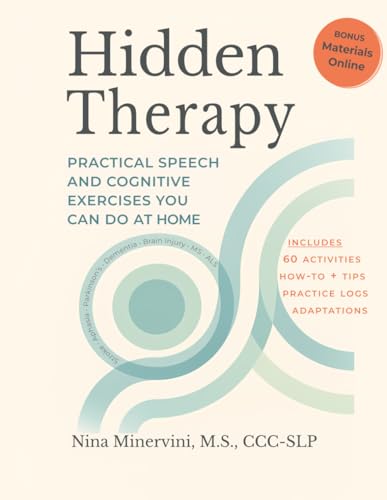
Hidden Therapy: Practical Speech and Cognitive Exercises You Can Do At Home
If you find this article helpful, check out my book! This comprehensive activity book includes 60 therapeutic exercises specifically designed for home practice, with detailed adaptations for aphasia built into each activity.
- 60 Therapeutic Activities
- 11 Different Themes
- Support for Caregivers
- Bonus Materials Online
Exercise your brain daily
Cognitive changes can be frightening, but cognitive exercise makes a real difference. Think of it as physical therapy for your brain.
Do one cognitive workout per day: Read aloud for 15 minutes (combining cognitive and speech exercise). Complete a crossword puzzle or word game. Have a meaningful conversation that requires focus and memory.
Journal about your day or your thoughts. Learn something new, even in small doses.
The activity itself matters less than regular engagement. You're building cognitive reserve, the brain's ability to maintain function even as the disease progresses.
Get speech therapy now, not later
Here's what most people don't want to hear: speech therapy works best before communication becomes severely impaired.
Waiting until you're struggling to be understood means you've lost valuable time when therapy could have been preventing decline rather than managing crisis.
If you're noticing any changes (reduced volume, monotone speech, mumbling, difficulty being heard in noise, concerns from family members), now is the time.
Early intervention can preserve your communication abilities for years longer than waiting until problems become severe.
Daily Habits: The Unsexy Stuff That Actually Matters

These resolutions aren't exciting, but they're foundational. Daily habits create the stability that allows you to pursue the goals that matter most.
Drink water intentionally
Dehydration worsens virtually every Parkinson's symptom. It increases fatigue, clouds thinking, drops blood pressure (leading to dizziness), and thickens secretions (making swallowing harder).
Yet many people with Parkinson's avoid drinking because they're worried about frequent urination or because reduced thirst sensation means they simply forget.
Set specific hydration goals. Use reminders if needed. Keep water bottles in multiple locations. Drink consistently throughout the day rather than trying to catch up all at once.
Build routine around your medications
Parkinson's medications work best with consistency. Eating and sleeping at regular times helps your body process medications predictably. This is especially true for levodopa, which competes with dietary protein for absorption.
Work with your neurologist to understand the best timing for meals relative to medication doses, then build your daily routine around that framework.
Take sleep seriously
Sleep problems are nearly universal in Parkinson's, but better sleep habits make a real difference.
Create a dark, cool bedroom.
Maintain a consistent bedtime routine.
Limit screen time in the evening.
Address issues like restless legs, REM sleep behavior disorder, or frequent nighttime urination with your medical team rather than accepting them as inevitable.
Quality sleep affects everything: your movement, your mood, your cognition, and your resilience.
Respect your energy limits
Fatigue is one of the most common and disabling symptoms of Parkinson's, and it's invisible to others. This year, practice something revolutionary: respecting your energy limits without apologizing for them.
Pacing isn't weakness. It's strategy.
It's how you remain functional for what matters most rather than burning out early in the day on tasks that don't align with your priorities.
Say no without guilt.
Rest without shame.
Save your energy for the activities and people you value most.
Your Emotional Life and Identity Matter

Parkinson's doesn't just affect your body. It challenges your sense of self. These resolutions focus on maintaining emotional health and preserving the aspects of identity that matter most to you.
Join a support group
Isolation makes every symptom feel heavier. Whether you prefer in-person meetings or online communities, connecting with others who understand your experience without explanation is profoundly valuable.
You'll find practical strategies, emotional validation, and the reminder that you're not facing this alone.
Name what you're feeng
Anxiety and depression are neurological symptoms of Parkinson's, not personal failures or character weaknesses. The disease affects the brain's production of dopamine and serotonin, the same neurotransmitters that regulate mood.
Practice naming what you're feeling rather than suppressing it. "I'm feeling anxious about my appointment tomorrow" or "I'm grieving the activities I used to do easily."
Naming emotions reduces their power and opens the door to addressing them appropriately, whether through therapy, medication, coping strategies, or simply acknowledging the validity of what you're experiencing.
Keep doing one thing that reminds you who you are
This might be the most important resolution on this list: keep doing at least one thing that reminds you who you are beyond your diagnosis. Music, cooking, teaching, volunteering, creating art, mentoring, gardening, whatever brings you joy and purpose.
You are not "a person with Parkinson's." You are a complete human being who happens to have Parkinson's. The activities that define you matter, and they're worth protecting and adapting as needed.
Be kind to yourself
Progress with Parkinson's is rarely linear. You'll have good days and difficult days. You'll master a symptom only to have it return. You'll work hard on something and still see decline.
None of this means you're failing. It means you're living with a progressive neurological condition, and that reality requires a different mindset than the typical "work harder, get better" narrative our culture promotes.
When you notice self-criticism creeping in, pause and ask: "Would I speak to a friend this way?" Practice the same kindness toward yourself that you'd offer someone you love.
Take Control of What You Can

These final resolutions focus on taking control of what you can influence and building systems that support your care.
Prepare for every medical appointment.
Walking into a neurology appointment can feel overwhelming. Fifteen minutes goes quickly, and it's easy to leave having forgotten to mention the symptoms that concern you most.
Before every medical visit, write down your top question or concern. Bring a symptom diary if you've been tracking patterns. Don't leave the office until you've addressed your priority issue, even if it means redirecting the conversation.
Track symptoms briefly
You don't need an elaborate system. Even a simple weekly check-in helps. Note patterns you're noticing: Are symptoms worse at certain times of day? How are medications working? What's changed since your last appointment?
This information is gold for your medical team. Parkinson's management requires constant fine-tuning, and accurate symptom reporting allows for better medication adjustments.
Make one home safety improvement
You don't need to renovate your entire house, but small modifications can prevent major problems:
Better lighting in hallways and bathrooms
Grab bars near the toilet and shower
Removing throw rugs that could cause tripping
Decluttering walkways
These simple changes reduce fall risk significantly.
Educate someone you love
Parkinson's is complicated, and the people who care about you might not understand what you're experiencing. They might interpret symptoms as personality changes, laziness, or aging rather than recognizing them as neurological symptoms.
Choose one person (a spouse, adult child, close friend) and help them truly understand Parkinson's. Share resources, bring them to an appointment, or simply have honest conversations about what you're experiencing. Shared understanding reduces tension, improves caregiving, and helps them support you more effectively.
Focus on What You Can Strengthen

I'll leave you with this thought: "I will focus on what I can strengthen, not what I've lost."
This isn't about pretending Parkinson's isn't hard. It's about choosing where to direct your limited energy, toward the things you can still influence rather than constantly mourning what's changed.
Some days, strengthening something means simply maintaining it. Other days, you might surprise yourself with genuine improvement. Both are victories worth celebrating.
Your Voice Deserves Protection

If you're living with Parkinson's disease in South Florida and have noticed any changes in your voice, speech clarity, or communication confidence, I want you to take one of the most important steps you can take this year: get speech therapy now, not later.
Early intervention makes all the difference. The strategies and exercises that preserve your communication abilities work best when implemented before significant decline occurs. Waiting until people regularly can't understand you means we're managing crisis rather than preventing it.
I'm Nina Minervini, a speech-language pathologist specializing in Parkinson's disease, and I'm here to help you maintain your voice, your clarity, and your confidence in communication.
Whether you're in the early stages and want to stay ahead of potential changes, or you're already experiencing communication challenges, evidence-based speech therapy can profoundly impact your quality of life.
Don't let another month go by hoping things won't get worse. Communication is too important to your relationships, your independence, your safety, and your sense of self.

Contact me today to schedule your evaluation. Together, we'll create a personalized plan to strengthen your communication and preserve your voice for all the conversations that matter most.
Phone: (561) 797-2343
Email: ninaminervini11@gmail.com
Your voice deserves to be heard. Let's make sure it is.
Ready to take control of your communication? Reach out to Nina Minervini for specialized Parkinson's speech therapy in South Florida. Your future self will thank you for starting today.
