Hidden Therapy: Communicate & Heal at Home
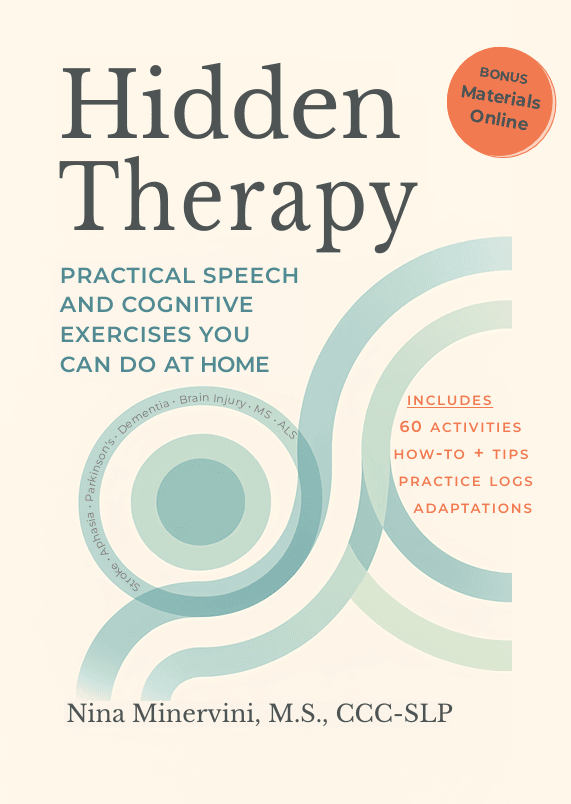
More than exercises, Hidden Therapy provides a practical, compassionate guide for families supporting adults with communication challenges.

Get Your Online Bonus Materials
Loving Hidden Therapy and here for your bonus activities, printouts, and other materials?
Click the button below, and enter your code.
Look Inside Hidden Therapy
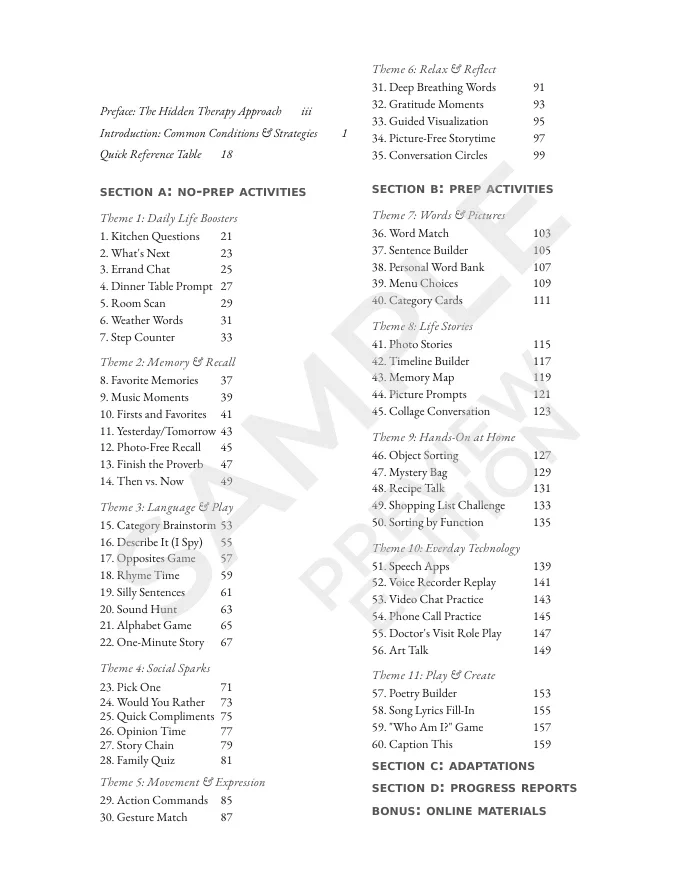
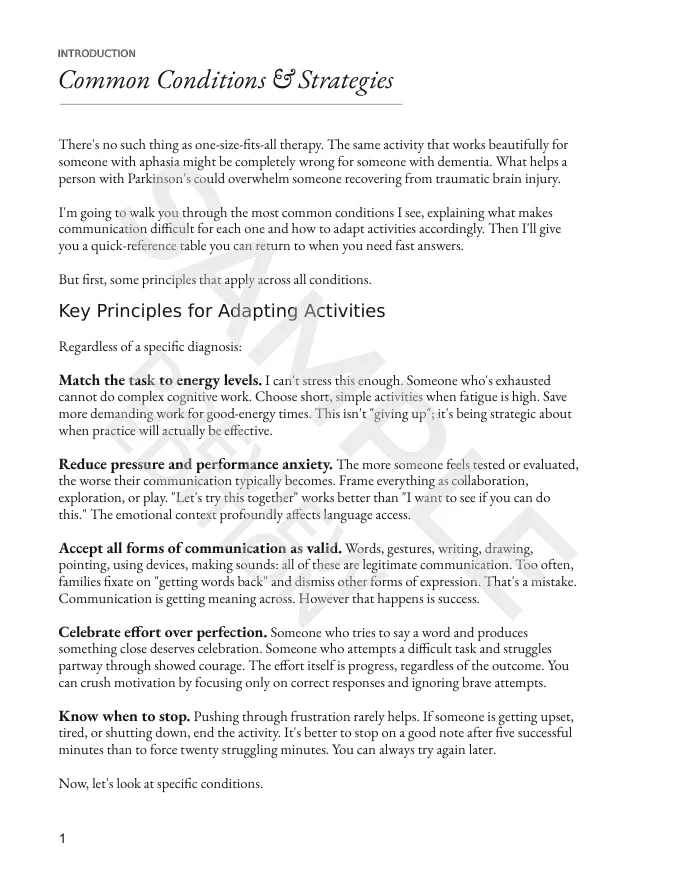
60 Activities Supporting Real Communication & Growth
Hidden Therapy was created to help caregivers, spouses, adult children, and friends support someone they love who is living with communication, cognitive, or swallowing challenges.
Written with warmth and clinical clarity, the guide breaks down complex therapy strategies into simple, practical exercises families can use at home, without the stress or guesswork.
Hidden Therapy includes:
35 no-prep communicative activities
25 some-prep communicative activities
Easy-to-understand explanations
Step-by-step guides and tips from years of experience
Exercises, adaptations, and prompts you can use immediately
Guidance for dementia, Parkinson’s, stroke, TBI, and more
Reflection modules for caregiver support
About the Author
Nina Minervini, M.S., CCC-SLP is a licensed speech-language pathologist who specializes in adult neurological communication in South Florida.
She has worked with individuals recovering from stroke, living with Parkinson’s disease, managing dementia, and navigating cognitive-communication changes. Nina’s passion is giving families practical, compassionate tools that make daily communication easier, more meaningful, and more human.
Nina provides in-home speech therapy services in South Florida.

Why Hidden Therapy?
Hidden Therapy is inspired by Nina’s earlier career as an English teacher in Korea, where she learned one of the most powerful teaching concepts she has ever encountered: hidden practice.
In language classrooms, hidden practice happens when students use the target language without realizing they’re “studying.” It’s the kind of practice that emerges naturally during games, group tasks, problem-solving activities, or moments of genuine connection.
Instead of drilling vocabulary or repeating phrases, students become absorbed in communicating, and that’s when:
The deepest learning occurs.
Learners stop thinking about the lesson, and they start speaking.
Fluency grows without resistance.
Hidden Therapy is built on that same philosophy.
Adults with communication or cognitive challenges make their biggest gains not during sterile, forced exercises, but during real moments of connection with the people they trust.
When caregivers shift the focus away from “fixing deficits” and toward meaningful interaction during moments cooking together, reminiscing, playing simple games, retelling stories, and doing familiar tasks…the work no longer feels like “therapy.”
But something powerful is happening beneath the surface:
Less pressure → more confidence
Less correction → more willingness to speak
Less formality → more authentic expression
More joy → stronger neural pathways for communication
Hidden Therapy gives caregivers and loved ones the tools to create these moments intentionally, to create moments where everyone in the room relaxes, communicates, and connects.
It’s therapy that doesn’t feel like therapy, yet ends up doing more good than anyone expects.
Many of the exercises are akin to PACE Therapy for aphasia treatment at home and Response Elaboration Training (RET) for stroke recovery, and they are designed so that anyone can lead the activities with adaptations covering the vast majority of conditions adults may face.
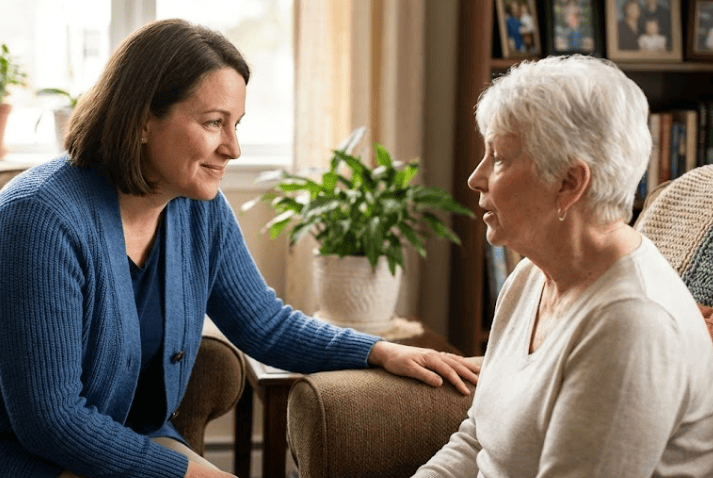
Conditions Supported by Hidden Therapy
Hidden Therapy is designed for caregivers supporting adults with a wide range of communication, cognitive, and speech changes. While every person’s abilities and needs are different, the book offers practical activities, conversation strategies, and communication frameworks that help families stay connected, even as conditions change.
These approaches are especially useful for caregivers of adults living with:
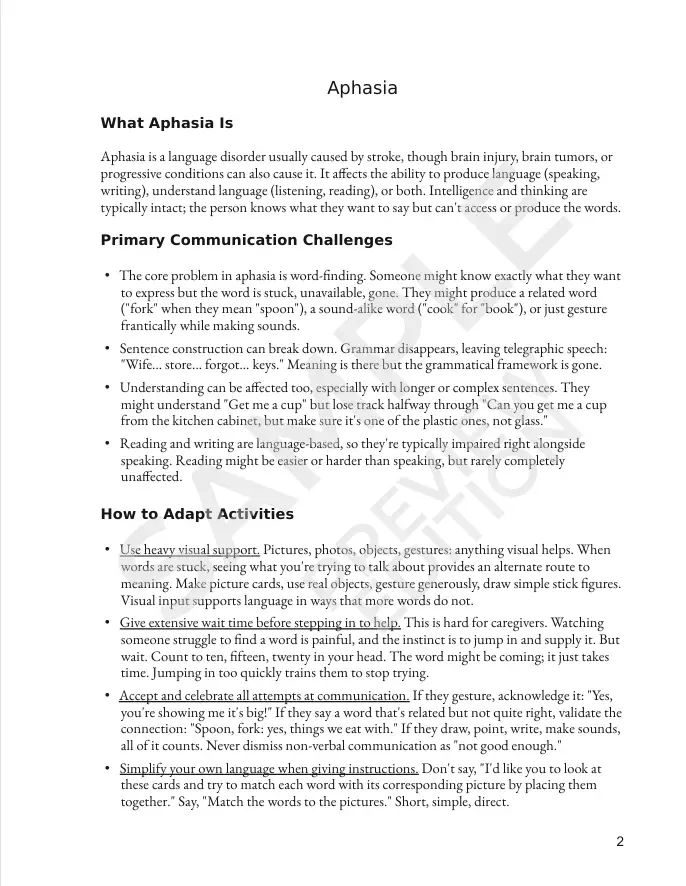
Aphasia (Post-Stroke Language Changes)
Word-finding challenges, difficulty expressing thoughts, or trouble understanding language can make daily conversations frustrating. Hidden Therapy provides simple communication supports, structured prompts, and low-pressure activities that invite participation without correcting or overwhelming.
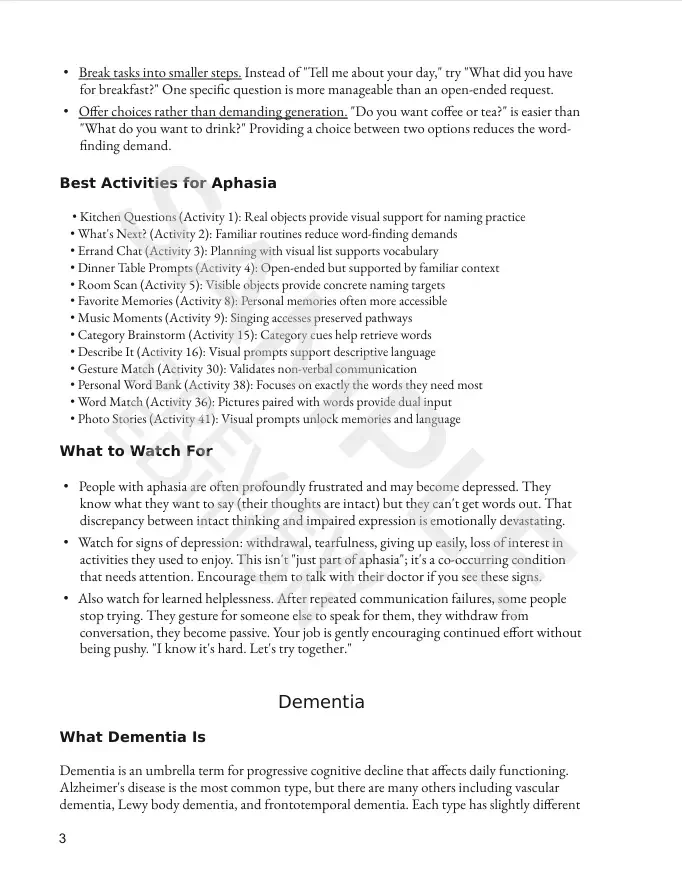
Dementia & Alzheimer’s Disease
Memory loss, disorientation, and communication breakdowns are common. The book’s validation-based strategies, reminiscence activities, and gentle conversation prompts help maintain connection and reduce frustration for everyone in the room.
Parkinson’s Disease
Soft voice, reduced facial expression, and slower processing can make communication feel effortful. Hidden Therapy includes pacing techniques, partner strategies, and engaging activities that encourage clearer, more confident interaction.
Traumatic Brain Injury (TBI)
Attention, memory, organization, and word retrieval may all be affected after TBI. Activities in the book help caregivers support communication during real tasks — cooking, sorting, storytelling, music, routines — without making the person feel tested.
Dysarthria
Changes in speech clarity can make it hard to be understood. Hidden Therapy emphasizes alternative communication strategies, conversational repair tools, and supportive listening habits that help families stay connected.
Apraxia of Speech
When motor planning for speech becomes difficult, structured yet non-clinical-feeling activities allow communication to unfold naturally, reducing pressure and building confidence.

Stuttering
Repetitions and blocks can become more noticeable under stress. The book’s calm, connection-focused activities create supportive environments that encourage relaxed, pressure-free communication.
Multiple Sclerosis (MS)
Cognitive fatigue, slowed processing, and occasional speech changes may appear. Hidden Therapy emphasizes adaptable activities that match energy levels while promoting meaningful engagement.
ALS (Amyotrophic Lateral Sclerosis)
As speech changes progress, maintaining connection becomes even more essential. Hidden Therapy provides caregivers with alternative communication strategies, yes/no scaffolding, and shared-activity ideas to help preserve emotional closeness.
Head & Neck Cancer
Voice changes, discomfort, or treatment-related challenges may affect communication. Gentle, compassionate communication strategies help caregivers support expression without drawing attention to limitations.
Mild Cognitive Impairment (MCI)
Early memory or attention changes can impact daily conversation. The book offers supportive prompts and routines that keep communication flowing without pressure.
Progressive Neurological Conditions
For individuals experiencing communication changes due to progressive conditions, Hidden Therapy emphasizes dignity, autonomy, and genuine connection in daily interactions.

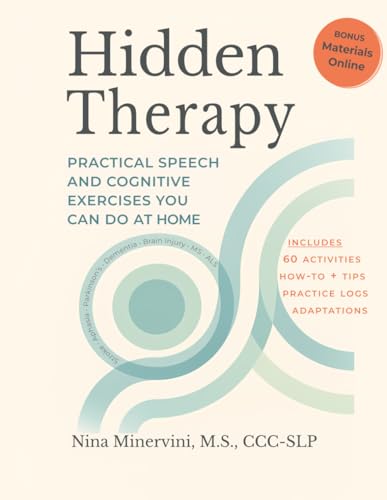
More About Hidden Therapy
Hidden Therapy is a practical, caregiver-centered activity book created to make communication support feel natural instead of clinical. Inside, you’ll find 60 therapist-developed activities that blend real-world tasks with communication, cognitive, and interaction strategies you can use at home — no special training required.
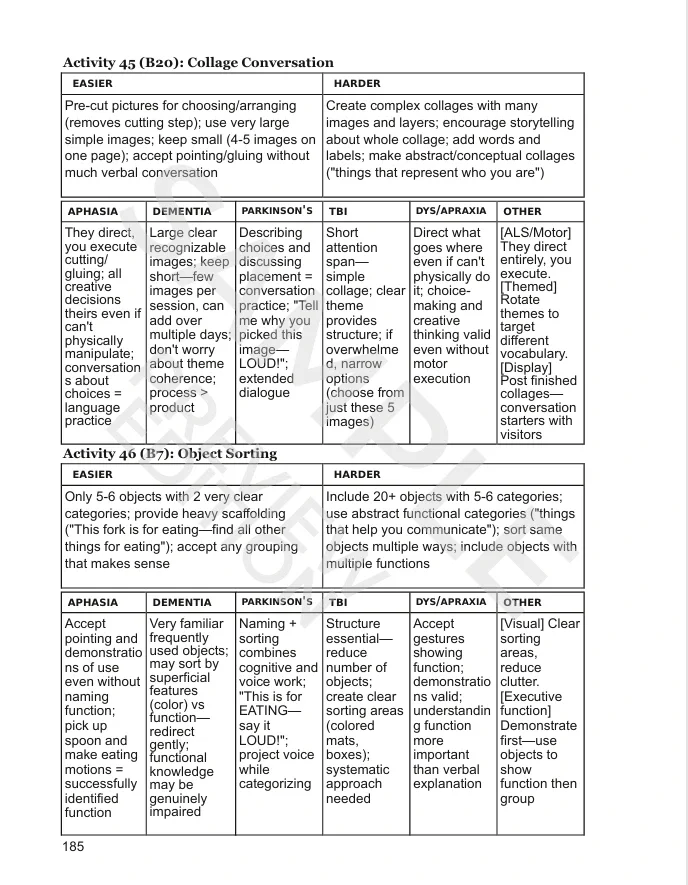
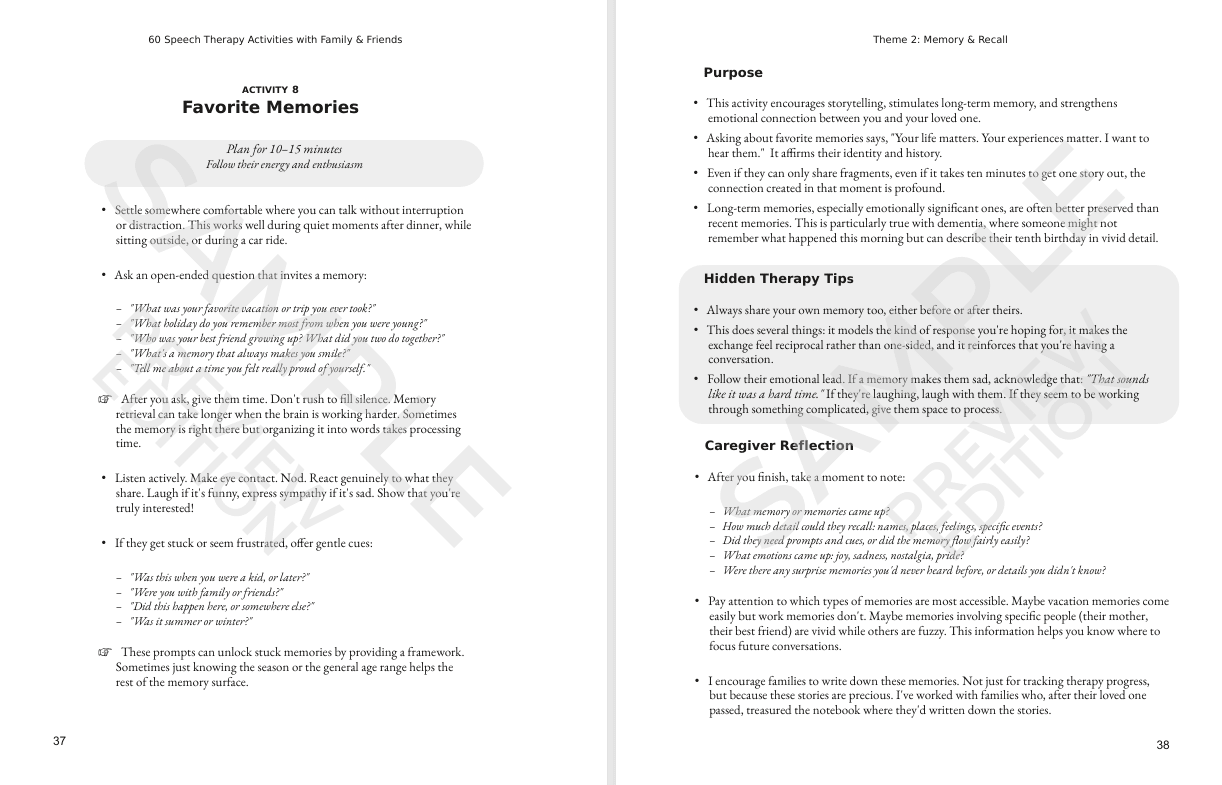
Each activity includes:
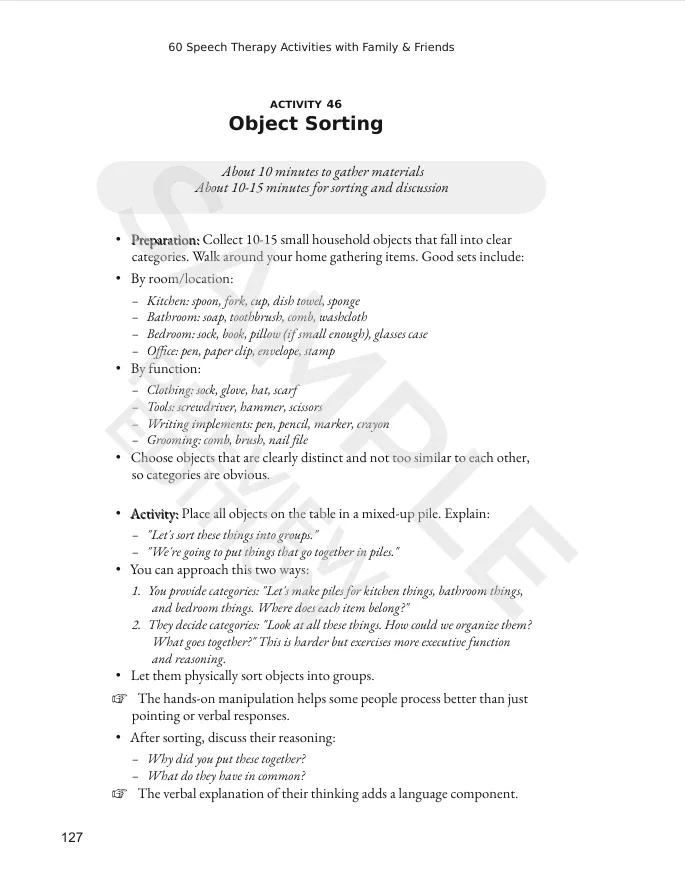
Clear, step-by-step instructions
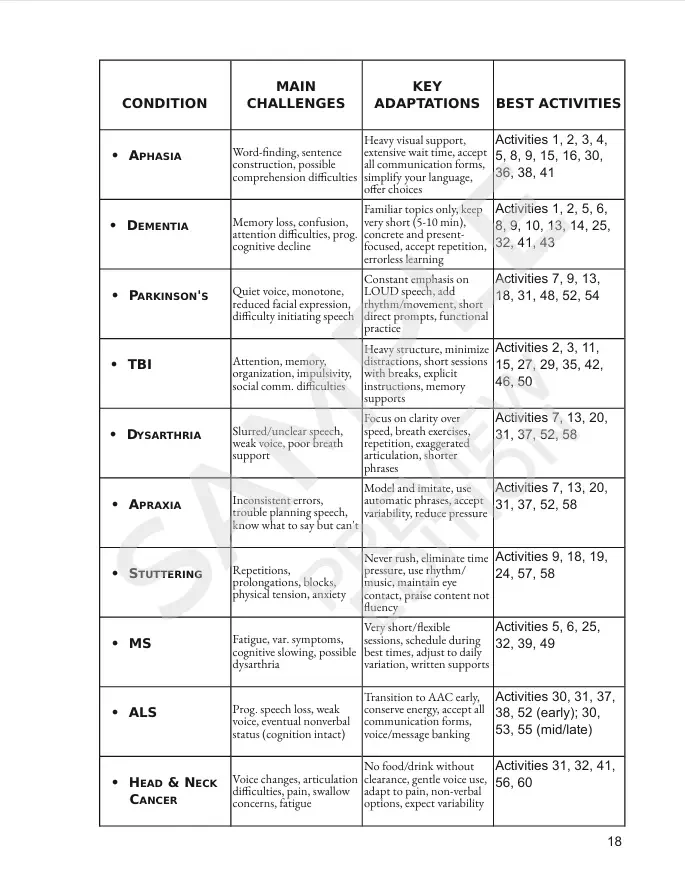
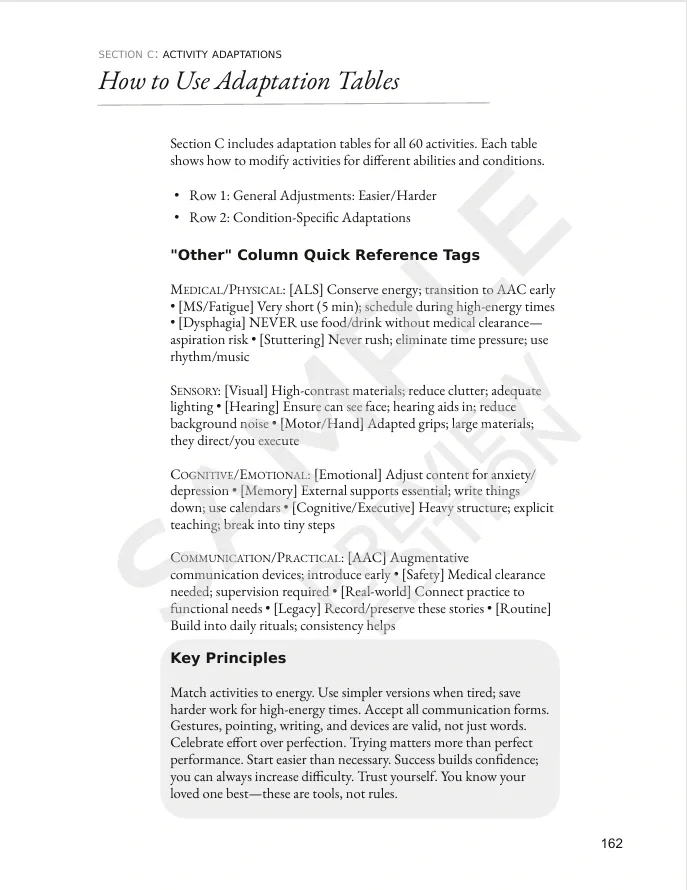
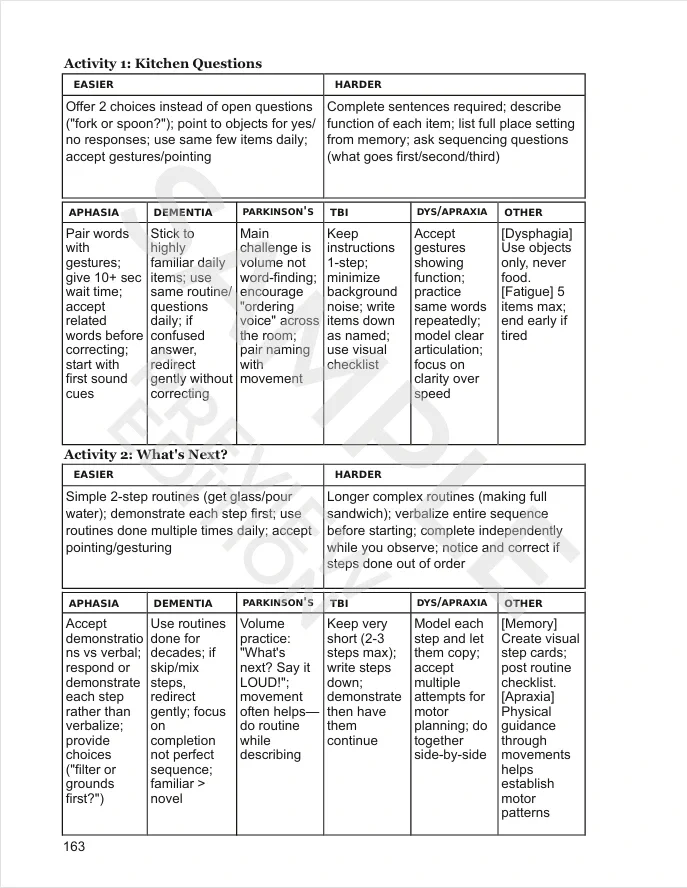
Built-in adaptations for common conditions (dementia, Parkinson’s, stroke/aphasia, TBI, dysarthria, apraxia, MS, ALS, and more)
Ways to make the task easier or more challenging
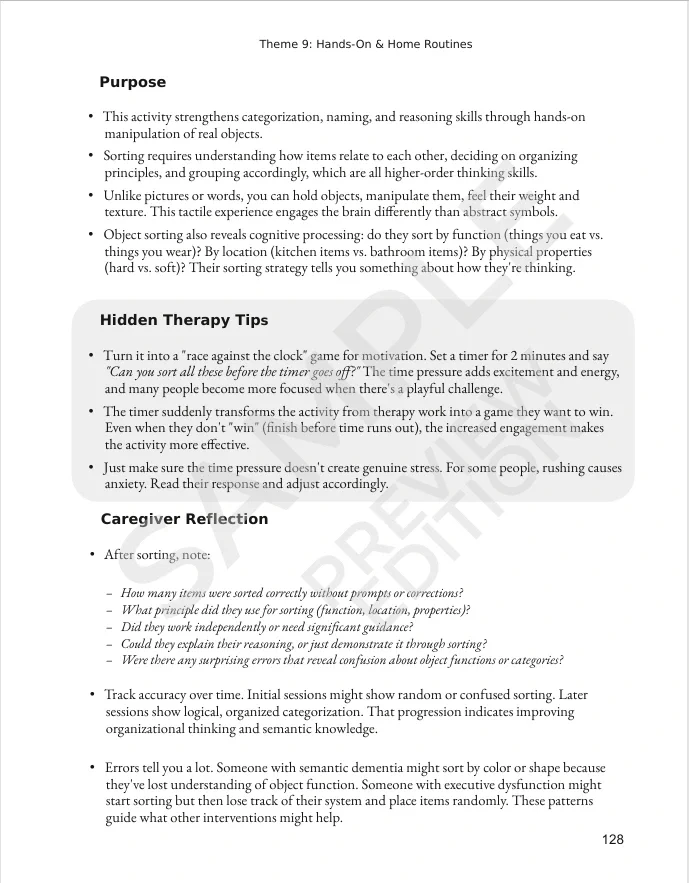
The “why” behind the activity and how it supports thinking, communication, or connection
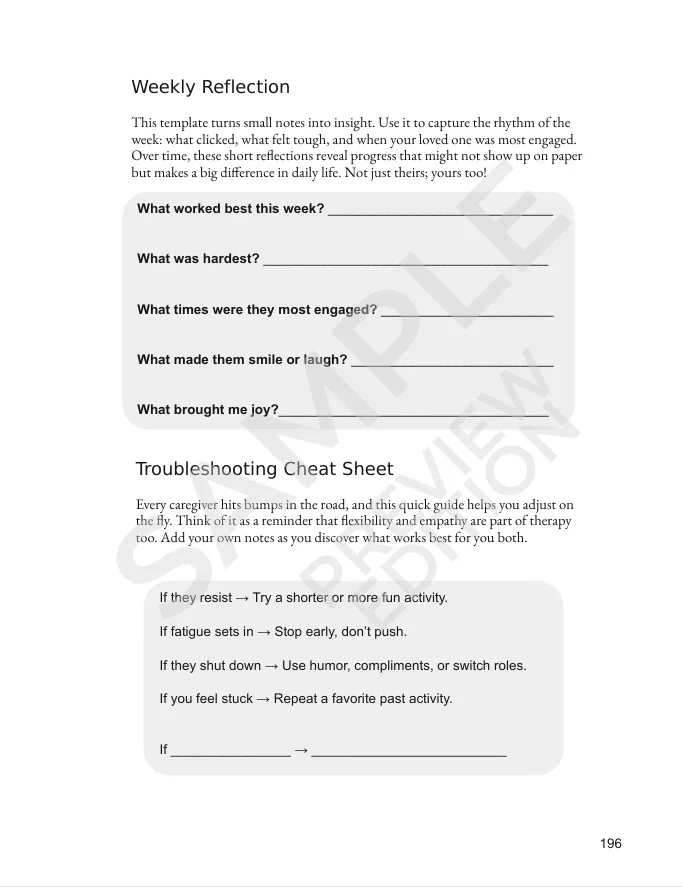
Caregiver reflection prompts to help you notice what’s working
Progress-tracking guides to monitor change over time
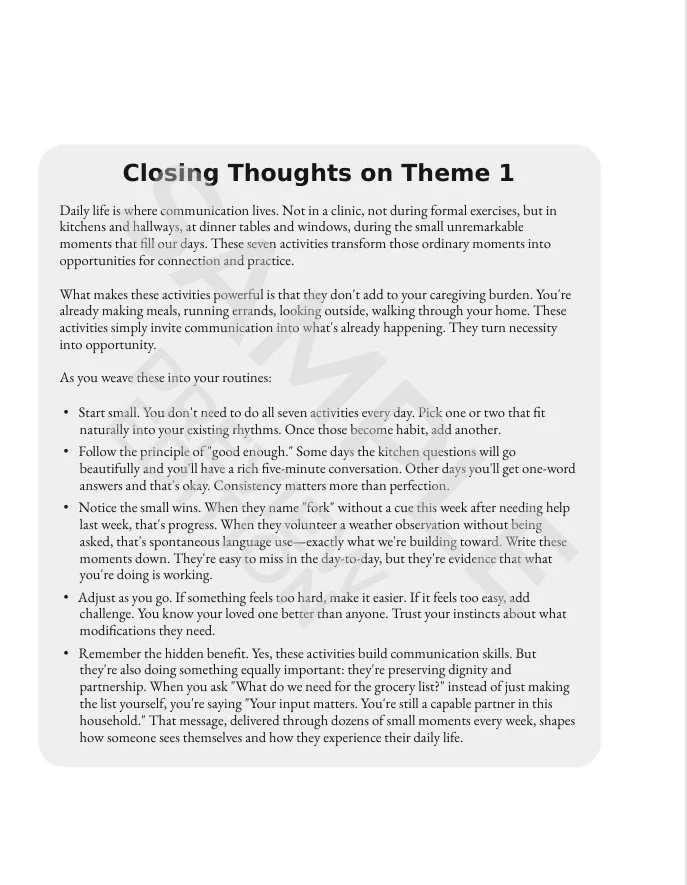
The book is designed to reduce pressure, increase confidence, and help families create genuine moments, supporting connection, autonomy, and dignity.